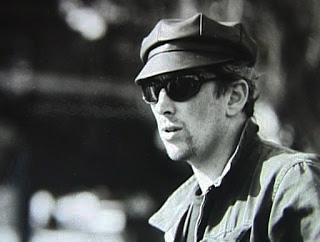
Arriving at the University of Melbourne in the
late 1950s, he was deeply involved in the development of screen
culture in Melbourne at an impressionable time, and was central to
the dissemination of the ideas and approaches of the nouvelle
vague and their antipodean variations.
He became a vital force in
the Melbourne University Film Society (MUFS) and its various
offshoots, including the establishment of Unifed, a small production
fund set up by MUFS and the Melbourne Film Festival. It helped fund
several of the films that would emerge from this scene and that would
help make Carlton one of the few “centres” of film production in
Australia in the second half of the 1960s. Davies took a very active
role in running MUFS in the early 1960s – it was the largest club
on campus across the decade – edited a number of the journals
produced by and around the organisation (including the landmark Film
Journal), and wrote significant and substantial early pieces on a
range of influential filmmakers including Claude Chabrol (a
particular influence), Robert Bresson and François Truffaut. He also
published substantial articles on the western and the nouvelle
vague. This latter essay is remarkable for its insight into the
work of this “group”, especially as only a smattering of their
films had been shown in Australia at the time (the second half of
1962), and none by such key members as Jacques Demy and Jean-Luc
Godard. Davies was also seen as an important mentor to other
contributors to this scene and probably did more than anyone else to
bring the vital ideas and approaches of contemporary modernist cinema
to Melbourne.
The
1960s was a relatively barren time for film production in Melbourne
and Australia. Only 18 feature films of any kind were completed
across this decade. It is remarkable that three of these features
were made – on miniscule budgets – by filmmakers emerging from
this scene. Davies was the most productive and tenacious of these
filmmakers. A key innovation of the nouvelle vague was how it
drew together film spectatorship, curation, criticism and production.
It also took advantage of developments in lightweight film and sound
technologies as well as more sensitive film stock. These were also
core developments, motivations, affordances and inspirations for the
group of critics, programmers, activists and burgeoning filmmakers
who emerged from this local scene. But there were virtually no models
for this mode of “guerrilla” filmmaking in Australia, with only
isolated figures such as Giorgio Mangiamele and Nigel Buesst managing
to pull together truly independent work. This was very much a
vanguard or maverick action that was both internationally engaged and
locally isolated.
It
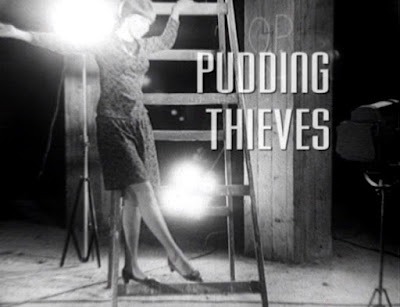
was in this context that Davies began work on Pudding Thieves,
a 54-minute $3500 feature he pieced together over four years and that
had its self-funded premiere at the Palais Theatre in St Kilda in
September 1967. It followed two short films he had completed while
working on the longer production: Una Filma Di (1964) and Watt’s Last Voyage (1965). Although Davies was quite
critical of the latter film, claiming it was mostly useful in
allowing him to trial specific equipment, it also points to the
important link between the burgeoning film and theatre scenes in
Carlton at this time (it also stars one of the key actors of this
shared scene, Graeme Blundell). Pudding Thieves’ piecemeal
production led to many problems, challenges and opportunities of
continuity, sound, style and performance, with the film appearing
both innovative and dated by the time of its eventual release (it was
mostly shot in 1963 and 1964). Like many equivalent films of its
time, it failed to gain a commercial release, and its subsequent
screenings were mainly restricted to the universities and film
societies.
At
this time, Davies became more closely involved with the theatre
scene, starring in the title role of David Williamson’s first
full-length play, The Indecent Exposure of Anthony East (1968), directing a range of plays at La Mama Theatre (which opened
in 1967), and appearing in small roles in several other MUFS-related
productions. He had also started a career in marketing and business
that would take him away from the theatre, film and arts scene in the
early 1970s. But he had one more significant contribution to make to
the “Carlton ripple”. Drawing upon his extensive work with actors
and influenced by the more radical formal modes of filmmaking of the
late 1960s he completed Brake Fluid in 1970, which went on to
win the award for best short fiction at the Sydney Film Festival the
following year. Although he expressed a desire to make a film about
Kokoda and adapt Randolph Stow’s To the Islands, this was
the last film he made or worked on. There was an attempt to entice
him to direct a film adaptation of Jack Hibberd’s Dimboola,
involving a number of significant figures of the earlier Carlton
scene, but by this time Davies had moved to Adelaide and onto a
successful business career (including as CEO of pharmaceutical
company, F. H. Faulding).
Brian
Davies is a largely forgotten figure in Australian cinema. In many
ways, he was an individual outside of or swimming against the main
currents of Australian film history. The two short 16mm features he
made were almost completely self-funded and appeared before the first
real stirrings of what came to be called the “revival”. By the
time more substantial opportunities arose and that he could have
taken advantage of, he had left Melbourne and the film scene behind.
But he made an extraordinary contribution in the 1960s at a time when
it was very difficult to make and show films. In many ways his
greatest contribution is in bringing together film and theatre,
production and criticism, the influences of an emerging international
cinema and a highly localised culture. The two features he made
demonstrate an extraordinary tenacity and adaptability and go some
way to demonstrating how the international influence of filmmakers
like Jean Rouch, Jacques Rivette, Jacques Rozier, Claude Chabrol,
John Cassavetes and Jean-Luc Godard could be adapted to distinctive
Australian conditions. In their deployment of handheld camera,
numerous high and pop cultural references, focus on the moment,
jagged form of editing, and thematic preoccupation with betrayal,
male friendship, daily life and the awkward exchanges between the
sexes they mine these international influences. But they also
couldn’t be made at any other time or in any other place. They are
Melbourne or Carlton films through and through.
Davies’
contribution to Australian cinema and Melbourne film culture should
no longer be underestimated, and both of his features demonstrate a
willingness to experiment with aspects of film form, style and
production that pave the way for important subsequent films like Bert
Deling’s Pure Shit (1975), John Ruane’s Queensland (1976) and Nigel Buesst’s Bonjour Balwyn (1971; which also
stars Brake Fluid’s John Duigan). Davies is the great model
for a truly productive film culture in the often-barren or difficult
terrain of 1960s Australia.
- Adrian Danks, November 2025.
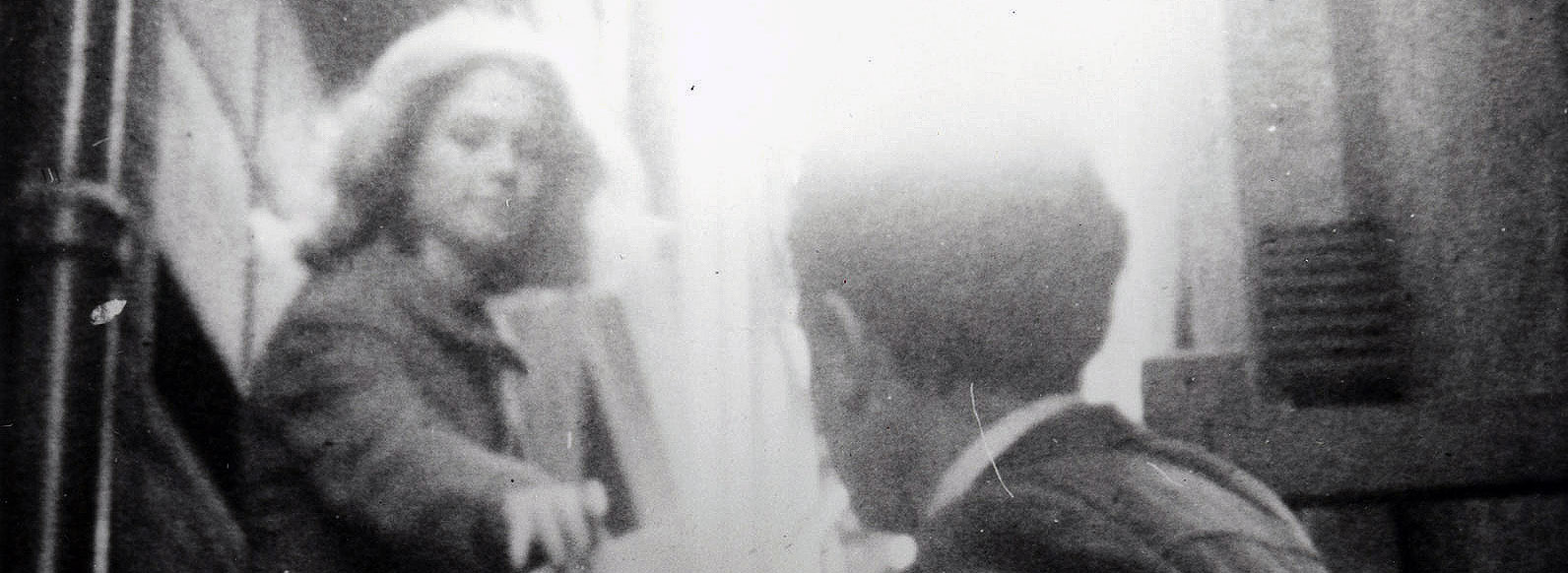
Pudding Thieves
FILMOGRAPHY:
Una Filma Di
(1964, 6 mins, 16mm)
Watt’s Last Voyage (1965, 8 mins, 16mm)
Pudding Thieves (1967, 54 mins, 16mm)
Brake Fluid (1970, 51 mins, 16mm)
©
Adrian Danks, November 2025
Back
to Melbourne independent filmmakers index page |